 admin
admin
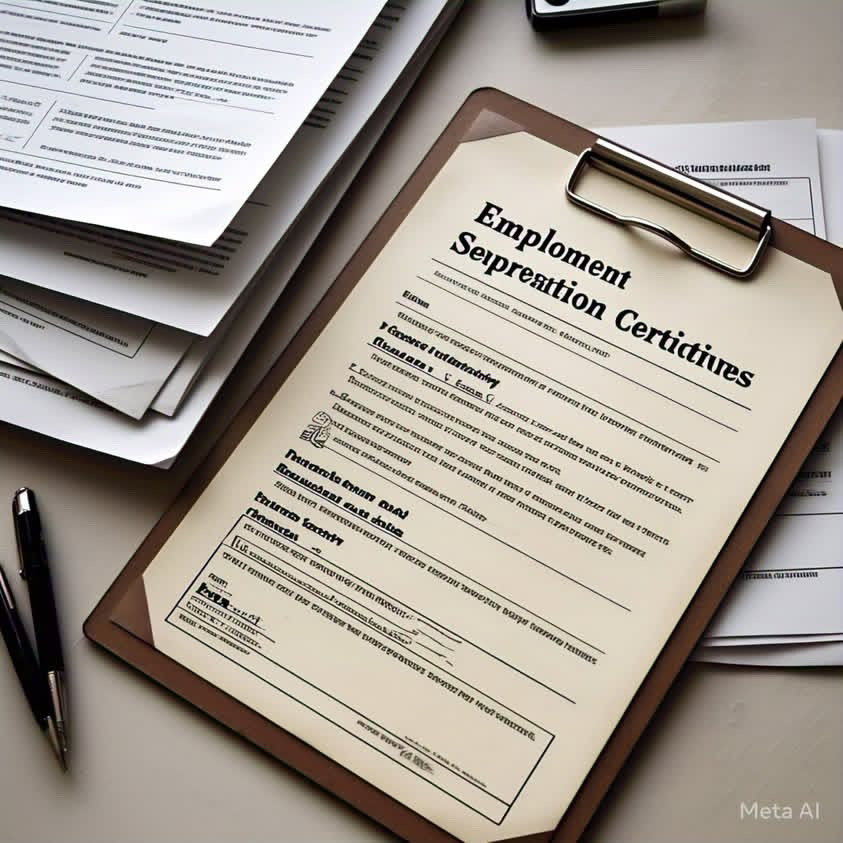
An Employment Separation Certificate is an essential document in the workforce that plays a crucial role when an employee leaves a job. This certificate serves as formal proof of employment termination and provides key details about the employee’s work history, including their start and end dates, job title, and reasons for separation. Whether you are an employer needing to issue one or an employee requiring it for government benefits, understanding the Employment Separation Certificate is vital.
This guide explores what an Employment Separation Certificate is, why it is needed, how to obtain one, and the responsibilities of both employers and employees regarding this document.
What Is an Employment Separation Certificate?
An Employment Separation Certificate is an official document issued by an employer when an employee’s job ends. It is often required by government agencies to assess an individual’s eligibility for unemployment benefits or other financial assistance.
The Employment Separation Certificate provides details such as:
•The employee’s full name and details
•The employer’s business name and contact information
•The employment start and end date
•The reason for termination (e.g., redundancy, resignation, misconduct, contract completion)
•Earnings and leave entitlements at the time of separation
Government agencies and financial institutions may require an Employment Separation Certificate to process applications for unemployment benefits, social security, or financial aid.
Why Is an Employment Separation Certificate Important?
The Employment Separation Certificate serves multiple purposes, benefiting both employees and employers.
For Employees
•Proof of Employment Termination – Many government agencies require an Employment Separation Certificate to confirm a person’s work history before approving benefits.
•Access to Unemployment Benefits – Employees applying for financial assistance need an Employment Separation Certificate to determine eligibility for payments.
•Job Application Requirements – Some future employers may request an Employment Separation Certificate as part of a background check.
For Employers
•Compliance with Legal Obligations – In many countries, providing an Employment Separation Certificate is a legal requirement, ensuring transparency in the job market.
•Preventing Disputes – Clearly stating the reason for termination on an Employment Separation Certificate can help avoid misunderstandings or legal claims.
•Supporting Former Employees – Issuing an Employment Separation Certificate promptly enables former employees to access benefits without delays.
Who Needs an Employment Separation Certificate?
An Employment Separation Certificate is typically required when an employee seeks government assistance after leaving a job. The following groups may need this document:
•Employees who are laid off or made redundant
•Workers whose contracts have ended
•Employees who resign voluntarily but still need proof of work history
•Individuals dismissed due to misconduct or other reasons
Government agencies use the Employment Separation Certificate to assess benefit claims, while banks or lenders may request it for loan applications.
How to Obtain an Employment Separation Certificate
Obtaining an Employment Separation Certificate involves a straightforward process, whether you are an employer issuing it or an employee requesting it.
For Employers: How to Issue an Employment Separation Certificate
Employers must follow these steps to provide an accurate Employment Separation Certificate:
1.Prepare the Document – Use the official template provided by the relevant government agency or create a document including all necessary details.
2.Include Accurate Information – Ensure the Employment Separation Certificate contains correct employment dates, termination reasons, and salary details.
3.Sign and Date the Certificate – An authorized company representative should validate the document.
4.Provide the Certificate Promptly – Issue the Employment Separation Certificate as soon as possible after an employee’s departure to avoid delays in benefit claims.
For Employees: How to Request an Employment Separation Certificate
If an employer does not provide an Employment Separation Certificate automatically, employees can take the following steps:
1.Contact the Employer – Request the certificate from the HR department or manager.
2.Submit a Written Request – If necessary, send a formal letter or email requesting an Employment Separation Certificate.
3.Follow Up if Needed – Employers are typically required to provide this document within a reasonable time frame.
What Happens if an Employer Refuses to Provide an Employment Separation Certificate?
If an employer refuses to issue an Employment Separation Certificate, the employee can take the following actions:
•Report the Issue to a Government Agency – Labor departments or employment regulators may intervene to ensure compliance.
•Seek Legal Advice – If an employer refuses to provide an Employment Separation Certificate, legal action may be an option.
•Contact a Union Representative – Union members may get assistance in obtaining the required document.
Employers should note that failing to provide an Employment Separation Certificate when required can lead to penalties or legal consequences.
Common Mistakes to Avoid When Issuing an Employment Separation Certificate
Employers should be careful when preparing an Employment Separation Certificate to prevent issues for former employees. Here are common mistakes to avoid:
•Incorrect Employment Dates – Any discrepancies in the employment period can delay benefit claims.
•Vague or Inaccurate Termination Reasons – Clearly state the reason for separation to prevent misunderstandings.
•Missing Signatures or Authorization – The document should be properly signed to be considered valid.
•Failure to Provide the Certificate Promptly – Delayed processing of an Employment Separation Certificate can negatively impact employees’ financial stability.
How Long Should Employers Keep a Copy of the Employment Separation Certificate?
Employers should retain copies of Employment Separation Certificates for record-keeping purposes. The recommended duration varies by country, but generally, businesses should keep employment records for at least five years. Keeping copies of Employment Separation Certificates helps in case of audits, disputes, or legal inquiries.
Digital vs. Paper Employment Separation Certificates
With advancements in technology, employers can issue Employment Separation Certificates in both digital and paper formats.
•Digital Certificates – Many employers now provide electronic Employment Separation Certificates via email or HR systems. Digital versions are convenient and environmentally friendly.
•Paper Certificates – Some organizations still provide physical copies, especially when required by government agencies.
Regardless of format, the Employment Separation Certificate must contain all required information and be signed by an authorized person.
Employment Separation Certificate: Key Takeaways
Understanding the Employment Separation Certificate is essential for both employers and employees. Here are the main points to remember:
•The Employment Separation Certificate is a crucial document required when an employee leaves a job.
•It provides essential details about employment, including start and end dates, reason for separation, and salary information.
•Government agencies, lenders, and other institutions may request an Employment Separation Certificate to process benefit claims or financial applications.
•Employers are responsible for issuing an Employment Separation Certificate in a timely manner.
•Employees can request an Employment Separation Certificate if one is not provided.
•Failure to provide an Employment Separation Certificate can result in legal consequences for employers.
Conclusion
The Employment Separation Certificate is an important document that ensures transparency and facilitates access to benefits for employees after leaving a job. Employers must issue it promptly, and employees should know how to request one if needed. By understanding the role and significance of an Employment Separation Certificate, both parties can ensure a smooth transition after employment ends.
For further assistance regarding the Employment Separation Certificate, employees can contact their local labor office, and employers can seek guidance from HR professionals to ensure compliance with legal requirements.

 admin
admin